
What Is MOQ in Packaging?
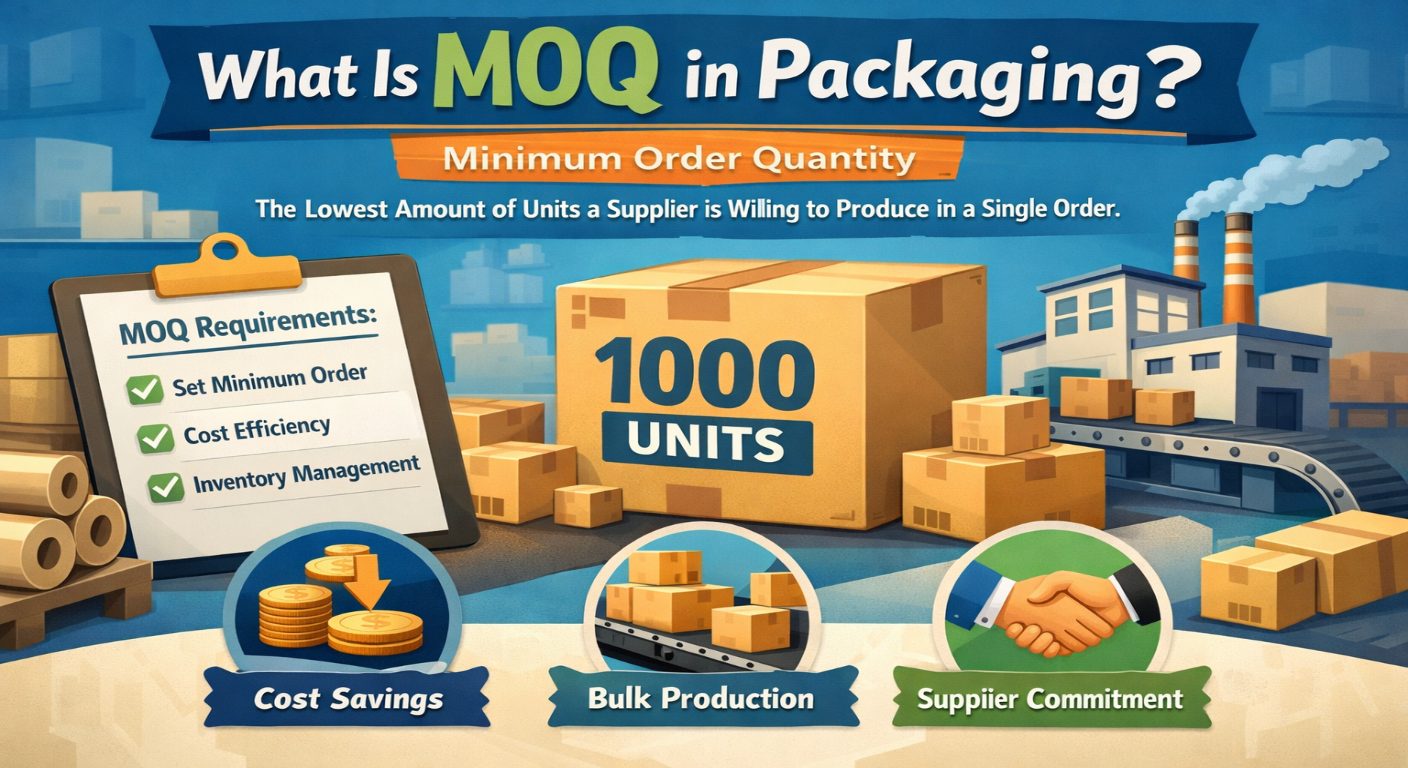
MOQ in packaging is the Minimum Order Quantity a supplier requires, usually ranging from 100 to 1,500 units depending on packaging type. Higher orders reduce per-unit cost, while premium options like custom printed rigid boxes may require larger MOQs. Suppliers implement MOQ to cover production costs and maintain quality.
If you are starting a new business or scaling an existing brand, understanding MOQ in packaging is crucial. MOQ, or Minimum Order Quantity, is a term that frequently comes up when working with packaging suppliers. Many businesses, especially small startups, are often confused about what MOQ is, why it matters, and how it affects their packaging costs and planning.
This comprehensive guide explains everything you need to know about MOQ in packaging, including factors that influence it, its cost implications, strategies to manage it effectively, and trends shaping the packaging industry in 2026.
What Does MOQ Mean in Packaging?
MOQ stands for Minimum Order Quantity. In simple terms, it is the smallest number of units a packaging supplier requires you to order in a single batch. For example, if a supplier sets an MOQ of 500 units, you cannot order fewer than 500 boxes in that production run.
MOQ applies to all types of packaging, from custom-printed rigid boxes to kraft boxes with logos or custom display boxes in the USA. Suppliers implement MOQs because manufacturing small quantities often isn’t cost-effective due to setup costs, material sourcing, and production processes.
Why Packaging Companies Set MOQ
The primary reason suppliers set MOQs is to cover their production costs. Producing packaging involves several steps, including design setup, sourcing materials, printing, cutting, and finishing. Many of these steps involve fixed costs that do not vary with order size.
For instance, creating custom-printed rigid boxes requires preparing printing plates and setting up the machinery. These setup costs are distributed across all units in the order they appear. The more units you order, the lower the cost per unit, which is why suppliers insist on a minimum order.
Typical MOQ Ranges in the Packaging Industry
MOQ varies depending on packaging type, customization, and supplier. Here’s a general breakdown:
- Wholesale retail packaging boxes: 100–500 units
- Custom printed rigid boxes: 500–1,000 units
- Premium rigid boxes or luxury packaging: 1,000+ units
- Kraft boxes with logo: 500–1,500 units
- Custom display boxes in USA: 500–1,200 units
For example, if you are ordering Kraft boxes with a logo, the MOQ typically ranges from 500 to 1,500 units, depending on the complexity of printing and finishing.
How MOQ Impacts Cost
MOQ plays a significant role in pricing. Generally, the higher your order quantity, the lower your cost per unit.
- Small quantity → higher cost per unit
- Large quantity → lower cost per unit
This is because bulk orders allow suppliers to optimize material usage, reduce waste, and operate production machines more efficiently. For instance, ordering 500 custom display boxes in the USA may cost $3 per unit, while ordering 2,000 units may reduce the cost to $1.80 per unit.
Benefits of MOQ for Businesses
While MOQ may seem restrictive, it offers several advantages when used strategically:
- Cost Efficiency: Bulk orders reduce cost per unit and help you save money.
- Brand Consistency: Producing a larger batch ensures uniformity in quality and appearance.
- Enhanced Presentation: With MOQs, you can invest in premium options like custom printed rigid boxes to make your packaging more attractive.
- Inventory Stability: Having sufficient stock reduces the risk of running out during high-demand periods.
Challenges of MOQ for Small Businesses
Small businesses or startups may find MOQ challenging for several reasons:
- High Initial Investment: Large minimum orders require significant upfront capital.
- Storage Requirements: Bulk packaging takes up space, which may increase storage costs.
- Risk of Waste: If your products or packaging needs change, excess boxes may go unused.
Understanding these challenges can help you make smarter decisions and avoid unnecessary expenses.
Strategies to Manage MOQ
Even if the MOQ seems high, there are ways to handle it efficiently:
- Start with Simple Designs: Opt for basic printing or standard designs to meet MOQ without overspending.
- Order in Phases: If the supplier allows, split large orders into smaller batches.
- Choose Versatile Packaging: Select packaging that works across multiple products, like wholesale retail packaging boxes.
- Work with Flexible Suppliers: Some packaging providers allow lower MOQs or digital printing options for smaller businesses.
- Negotiate Terms: Building long-term relationships with suppliers like Fox Tail Packaging can sometimes help reduce MOQs or provide better pricing.
MOQ vs. Bulk Orders
Many businesses confuse MOQ with bulk ordering, but there’s a difference:
- MOQ: Minimum units required to place an order.
- Bulk Order: Ordering larger quantities beyond the MOQ to take advantage of reduced per-unit pricing.
For example, if the MOQ is 500 custom-printed rigid boxes, ordering 2,000 units would be considered a bulk order. Bulk orders help brands maximize cost savings and improve production efficiency.
MOQ and Sustainable Packaging
Sustainability is a growing concern in the packaging industry. Many brands are adopting eco-friendly materials, which sometimes come with higher MOQs due to specialized production processes.
Even so, investing in sustainable packaging is beneficial for long-term brand reputation and appeals to environmentally conscious consumers. Options like Kraft boxes with a logo made from recycled materials are becoming increasingly popular.
Common Mistakes to Avoid
- Ignoring Demand Forecasting: Ordering too much packaging without analyzing sales can lead to waste.
- Choosing the Wrong Packaging Type: Selecting packaging that isn’t versatile can increase cost and storage issues.
- Focusing Only on Price: Cheap packaging may compromise quality and brand perception.
- Not Planning Storage: Ensure you have space for bulk orders before committing.
Trends in MOQ and Packaging for 2026
The packaging industry is evolving, and MOQs are adapting accordingly:
- Lower MOQs through Digital Printing: Technology allows suppliers to produce smaller quantities efficiently.
- On-Demand Packaging: Some suppliers now offer smaller production runs as needed.
- Personalized Packaging: Customization at smaller scales is becoming more accessible.
- Sustainable Production: Eco-friendly materials influence MOQ policies and manufacturing techniques.
These trends make it easier for businesses of all sizes to access high-quality, customized packaging.
How MOQ Helps with Branding
MOQ is not just a cost factor, it’s a strategic tool for enhancing your brand. Higher-order quantities allow you to invest in visually appealing solutions, such as custom display boxes in the USA or custom-printed rigid boxes, ensuring that every customer receives a consistent, memorable unboxing experience.
Companies like Fox Tail Packaging focus on helping businesses balance MOQ requirements with cost efficiency, providing high-quality options that reinforce brand identity.
Final Thoughts
MOQ in packaging is a critical concept for any business that wants to maintain quality, cost efficiency, and branding consistency. While it may seem restrictive at first, it allows suppliers to operate efficiently and ensures that businesses receive high-quality packaging at competitive prices.
By understanding MOQs, planning orders strategically, and working with flexible suppliers, businesses of all sizes can optimize their packaging strategy, improve the customer experience, and strengthen their brand image.
Frequently Asked Questions
What does MOQ mean in packaging?
MOQ stands for Minimum Order Quantity, the minimum number of units a supplier allows per order.
Why do packaging suppliers set MOQ?
Suppliers set MOQs to cover setup costs, ensure cost efficiency, and maintain production quality for items like custom-printed rigid boxes.
Can small businesses meet MOQ requirements?
Yes, small businesses can manage MOQs by choosing simple designs, flexible suppliers, or versatile options such as wholesale retail packaging boxes.
How does MOQ affect cost per unit?
Higher-order quantities lower per-unit costs, while smaller orders above the MOQ may be more expensive.
What are common MOQs for custom packaging?
Typical MOQs range from 100–500 units for simple boxes, 500–1,000 for kraft boxes with logo, and 1,000+ for premium or luxury packaging.

